Comparison
PDF summarizer vs PDF video summary
Summarising solves a reading problem. If yours is a distribution problem, a shorter document is the same thing ignored faster.
Two kinds of summarizer, and the difference matters
Extractive summarizers select sentences from the document and return them verbatim. Nothing is rewritten, so nothing can be invented — the output reads slightly disjointed, and every word is the author's.
Abstractive summarizers, which is what most AI tools do, write new sentences describing the document. They read far better and they can quietly get things wrong: dropping a hedge, converting a correlation into a cause, merging two findings into one.
For triage — deciding whether a document deserves your afternoon — extractive is the safer default. For a summary someone else will rely on, abstractive with a proofread.
- Extractive: verbatim, checkable, slightly choppy.
- Abstractive: fluent, requires verification, better for a general audience.
- Either way, check numbers and hedging words against the source.
What a summary cannot fix
Summarising your own document usually happens for one of two reasons. Either you need a short version for a specific person, or the full version is not getting read and you hope a shorter one will.
The second hope does not survive contact with reality. A person who did not open a fifteen-page PDF is not meaningfully more likely to open a two-page one, because the barrier was never length — it was that reading a document is a deliberate act requiring a quiet moment, and video is not.
What the video version changes
A three-minute narrated summary is consumed in circumstances a document cannot reach: on a phone, between meetings, at 1.5× speed, on mute with captions in an open-plan office. It also plays inline in a LinkedIn feed, which no PDF does.
The content is the same summary. The delivery is what changes the completion rate, and completion is the only metric that matters for a document whose problem is that nobody finishes it.
Using both, in order
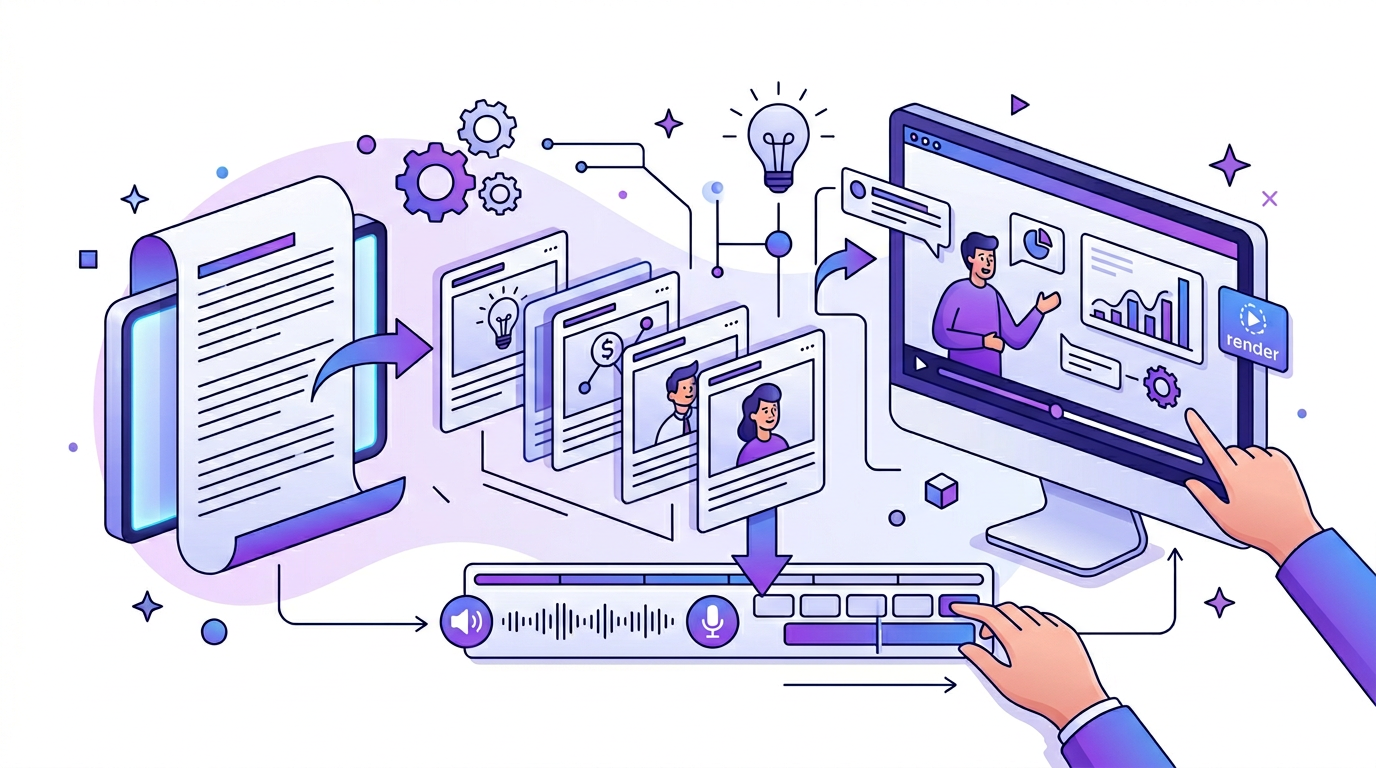
The summary is a good script outline. Summarise first to find the four or five sentences carrying the argument, check them against the source, then build the video around those with the document's own figures as the visuals.
That sequence also keeps the video honest: it is built from selected sentences you verified, rather than from a model's paraphrase of the whole document.
Frequently Asked Questions
What is the best free PDF summarizer?
For triage, any extractive tool that runs locally — including ours — because you can verify every sentence against the source. For a polished summary for others, an abstractive tool with a careful proofread.
Do AI summarizers get things wrong?
Abstractive ones can, most often by dropping qualifiers or firming up a hedged claim. Extractive ones cannot, because they only reorder the author's own sentences.
Should I publish a summary or a video?
If your audience already reads your documents, a summary is enough. If the complaint is that nobody reads them, the format is the problem and a shorter document will not solve it.